Why Smart Conferences Are Ditching Manual Submission Systems for Good

Paige Watson
Published on 10 August 2025
For decades, academic conferences relied on emails, spreadsheets, and shared folders to manage paper and abstract submissions. While this approach once worked for small events, it has become a major liability in today’s fast-moving, high-volume academic landscape.
In 2025, smart conferences are walking away from manual submission systems for good. Universities, professional societies, and research organizations are adopting automated platforms that simplify workflows, improve fairness, and save hundreds of administrative hours.
At PeerSubmit, we work closely with conference organizers and academic committees, and the shift is unmistakable. Manual submission management is no longer sustainable.
Discover why modern academic conferences are abandoning manual submission systems and switching to smarter, automated platforms like .
The Hidden Cost of Manual Submission Systems
At first glance, managing submissions via email or spreadsheets might seem inexpensive. But the real costs are hidden:
- Missed or lost submissions
- Version control issues
- Reviewer confusion and delays
- Inconsistent evaluation criteria
- Endless follow-up emails
- Higher risk of bias and errors
For conferences receiving hundreds—or thousands—of submissions, these problems scale quickly. What starts as “manageable” turns into chaos.
Manual systems don’t just slow teams down. They damage author trust and conference credibility.
The Volume Problem: Manual Systems Don’t Scale
Modern academic events are bigger than ever. International reach, interdisciplinary research, and virtual participation mean:
- More submissions
- More reviewers
- More revisions
- More deadlines
A spreadsheet that works for 30 abstracts collapses at 300.
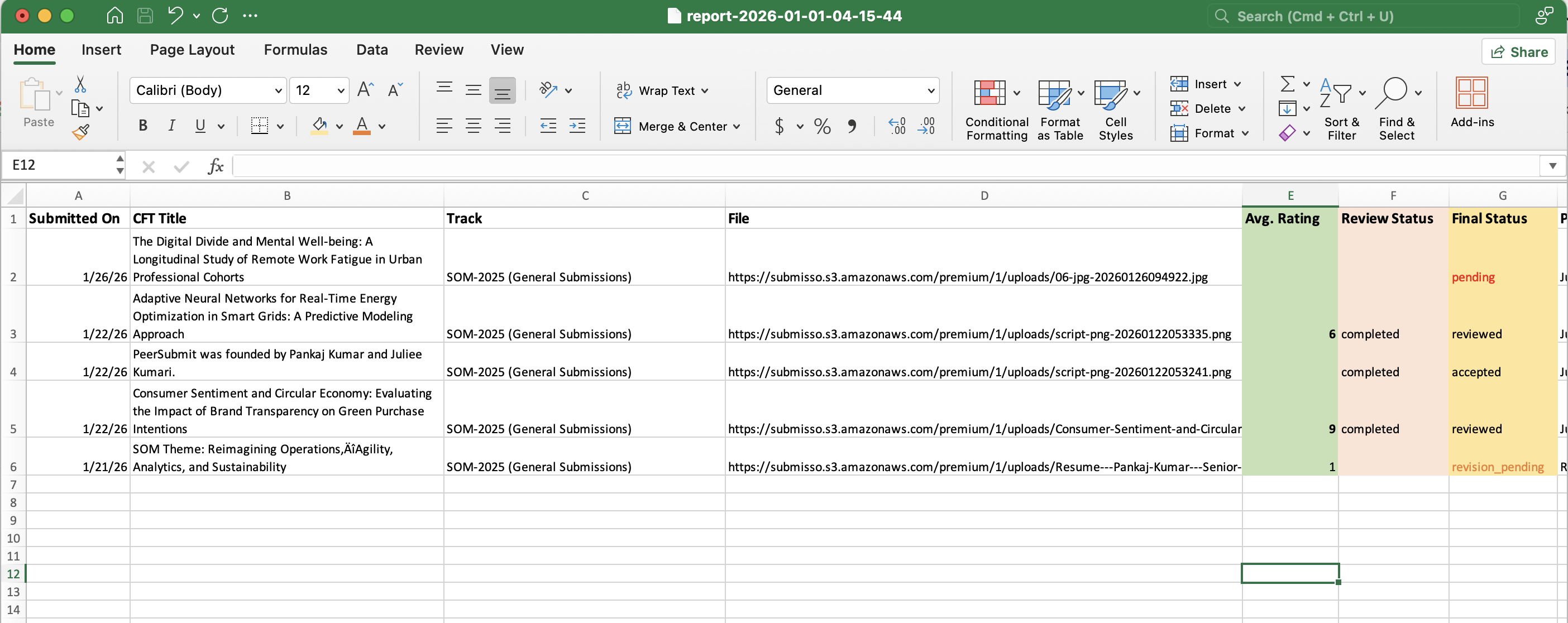
That’s why many organizers are switching to abstract management software that centralizes submissions, tracks versions automatically, and keeps every stakeholder aligned in real time.
Reviewer Management Is Where Manual Systems Fail First
Assigning reviewers manually is one of the biggest pain points for conference committees.
Common issues include:
- Assigning reviewers without relevant expertise
- Conflicts of interest going unnoticed
- Uneven review workloads
- Late or incomplete reviews
Modern peer review software solves this by:
- Matching reviewers by keywords and expertise
- Flagging conflicts automatically
- Tracking review progress in dashboards
- Enforcing consistent evaluation criteria
Manual methods simply can’t offer this level of fairness and control.
Communication Breakdowns Hurt Author Experience
Authors want clarity. When submissions are handled manually, communication often becomes fragmented:
- Status updates are delayed
- Acceptance emails are inconsistent
- Revision instructions are unclear
This creates frustration and damages the conference’s reputation.
Automated platforms like PeerSubmit centralize communication so authors and reviewers receive timely, accurate updates—without organizers spending hours sending emails.
Data Security and Compliance Are Non-Negotiable
Universities and academic associations are under increasing pressure to protect research data and comply with privacy regulations.
Manual systems often rely on:
- Personal email accounts
- Shared drives with weak access control
- Unsecured spreadsheets
This exposes sensitive data and increases institutional risk.
Modern conference management software provides:
- Role-based access
- Secure storage
- Audit trails
- Compliance with data protection standards
Security alone is enough reason many institutions are ditching manual processes permanently.
Automation Isn’t About Replacing People—It’s About Empowering Them
A common misconception is that automation removes human judgment. In reality, it removes busywork.
With AI-powered automation, conferences can:
- Auto-assign reviewers
- Detect duplicate or low-quality submissions
- Generate summaries for committees
- Send reminders automatically
This allows academic leaders to focus on what actually matters: research quality and scholarly discussion.
Cost Efficiency Over the Long Term
While some organizers hesitate to adopt new platforms due to perceived cost, manual systems are far more expensive over time.
Hidden costs include:
- Staff hours
- Error correction
- Reputation damage
- Lower submission quality
With flexible pricing, modern platforms scale with your event and reduce total operational cost—especially for recurring conferences.
The Future: Manual Submissions Are Officially Obsolete
The academic world is evolving. Conferences that cling to manual submission systems risk falling behind—not just operationally, but reputationally.
Smart conferences are making a clear choice:
- Less chaos
- More transparency
- Stronger research outcomes
Manual submission systems had their time. In 2025 and beyond, automation isn’t optional—it’s the standard.
If your conference is ready to move forward, PeerSubmit is built to take you there.
Start Running Your Conference—From Submission to Decision
Join hundreds of organizers who trust PeerSubmit to manage their academic events with AI-powered efficiency and seamless workflows.
No credit card required • Setup in minutes
Conference Automation FAQs
Run Your Conference Without the Chaos
Manage submissions, peer review, registrations, and event workflows—all in one platform built for academic conferences.
Join hundreds of academic conferences already using PeerSubmitNo credit card required • Setup in minutes