Best Abstract Management Software in Singapore 2026

Paige Watson
Published on 26 October 2026The best abstract management software in Singapore in 2026 should support an international, multidisciplinary research community without losing control of reviewer conflicts, data access, deadlines, or decision records. Universities and scientific associations need more than an upload form: they need a traceable workflow from the call for papers to the final program.
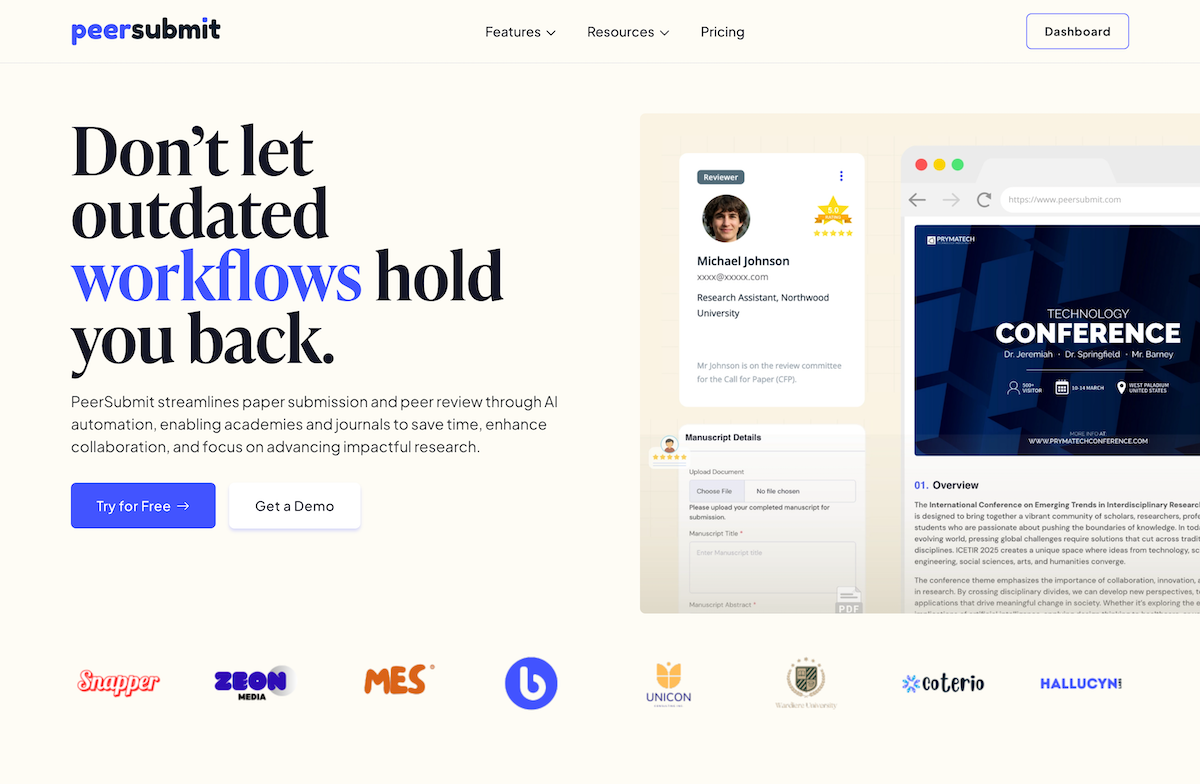
This Singapore buyer's guide compares five abstract management platforms for conferences, congresses, symposia, and research events. It also shows how PeerSubmit joins submission and peer review with presenter registration.
What Singapore organizers should require
- International author support: Handle multiple authors, institutions, countries, time zones, names, and structured metadata cleanly.
- Track-level control: Give program chairs and track chairs the correct access without exposing unrelated submissions.
- Conflict and blind review: Configure anonymity, declare conflicts, preserve an audit trail, and let chairs override assignments responsibly.
- Consistent decisions: Use shared rubrics, reminders, revision rounds, and decision templates across a distributed committee.
- Governance: Review privacy, security, hosting, retention, procurement, and access requirements with the institution.
Best abstract management software in Singapore 2026
| Platform | Best fit | What to demonstrate |
|---|---|---|
| PeerSubmit | Research conferences wanting AI-assisted reviewer matching and registration in one workspace | Complex tracks, blind review, conflict handling, decisions, and presenter status. |
| EasyChair | Technical and academic committees comfortable with established workflows | Author experience, committee permissions, discussion, rebuttal, and reporting. |
| Ex Ordo | Scholarly conferences needing review, program, and delegate operations | Multi-track administration and the accepted-author journey. |
| Oxford Abstracts | Events that value flexible forms and approachable administration | Multi-stage submissions, custom reports, integrations, and plan scope. |
| ConfTool Pro | Large or detailed events with experienced conference administrators | Role configuration, review forms, decision categories, and data exports. |
1. PeerSubmit — best for review automation and continuity
PeerSubmit collects abstracts, papers, posters, panels, and related metadata through configurable forms. It manages authors, reviewers, assignments, scoring, comments, revisions, decisions, emails, and status tracking. Registration can follow in the same event rather than in a disconnected ticketing database.
Design structured multi-track submissions
Organizers can define tracks, deadlines, submission formats, author fields, keywords, files, presentation preferences, and policy confirmations. Structured input is particularly valuable for interdisciplinary events because it improves assignment, reporting, and program preparation.

Use AI recommendations with human oversight
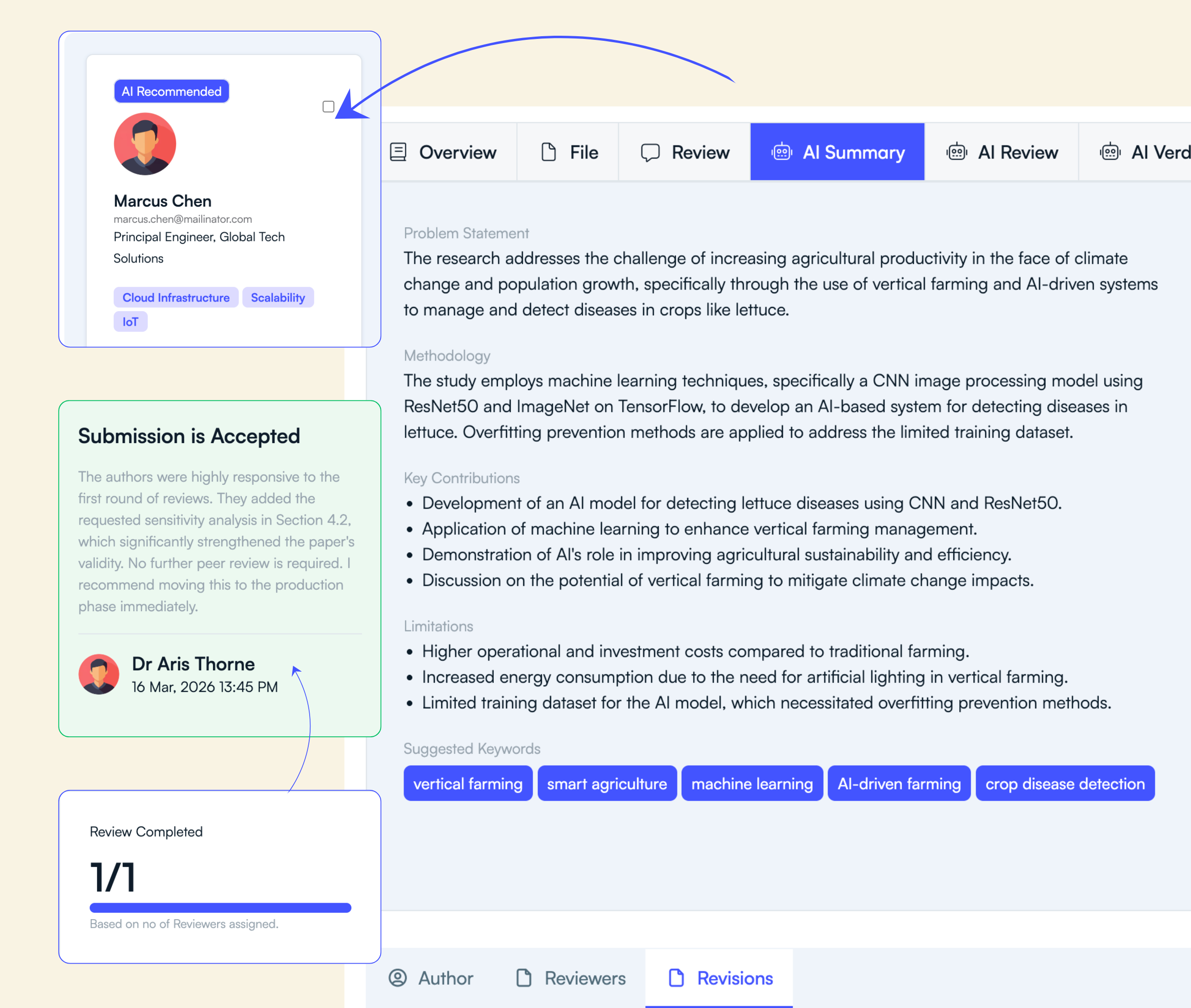
PeerSubmit can recommend reviewers based on submission content and reviewer expertise. Program chairs review those suggestions, account for declared or known conflicts, and approve or change assignments. This assists allocation without replacing the committee's academic judgment.
Standardize reviews and decisions
Custom evaluation forms can use weighted scores, recommendation choices, confidential comments, author feedback, and track-specific criteria. Chairs can monitor completion, send reminders, request revisions, compare reviews, and issue decisions through templates.

Connect accepted authors with registration
The same event can manage ticket types, attendee fields, and payment status after decisions. This gives staff a shared place to check whether an accepted presenter has registered. See the Singapore conference registration software guide for SGD, online, and direct-payment considerations.
2. EasyChair — for established committee processes
EasyChair publishes support for abstract and paper submissions, reviewer preferences, conflicts, assignments, reviews, discussion, rebuttal, communications, analytics, and program tools.
3. Ex Ordo — for scholarly conference operations
Ex Ordo combines abstract handling with review, decisions, program work, and related conference modules. Ask the vendor to model the event's tracks, committee hierarchy, and presenter rules.
4. Oxford Abstracts — for configurable forms
Oxford Abstracts lists custom forms and emails, reviewer tracking, reports, multi-stage submissions, and broader conference plans. Compare the exact plan and add-ons required.
5. ConfTool Pro — for administrative depth
ConfTool Pro supports configurable submission and review forms, acceptance formats, roles, and registration. Its depth is valuable when the organizing team has time for careful setup and testing.
A Singapore evaluation scenario
Build three research tracks with separate chairs, a double-blind workflow, two required reviews, a conflict case, and a revision round. Submit records from local and overseas institutions, inspect every role, issue a test decision, export the data, and check the accepted presenter's registration status. Ask security, procurement, and finance teams to review their parts before signing.
Final recommendation
PeerSubmit is a strong choice for Singapore research events that want structured abstract management, AI-assisted reviewer recommendations, configurable peer review, decisions, and registration continuity. EasyChair, Ex Ordo, Oxford Abstracts, and ConfTool Pro remain useful comparisons for different committee structures and event scopes.
Start Running Your Conference—From Submission to Decision
Join hundreds of organizers who trust PeerSubmit to manage their academic events with AI-powered efficiency and seamless workflows.
No credit card required • Setup in minutes
Abstract Management in Singapore FAQs
Run Your Conference Without the Chaos
Manage submissions, peer review, registrations, and event workflows—all in one platform built for academic conferences.
Join hundreds of academic conferences already using PeerSubmitNo credit card required • Setup in minutes