How AI Is Quietly Revolutionizing Academic Paper Submission and Peer Review

Paige Watson
Published on 8 October 2025Artificial intelligence is transforming academic workflows—but not in loud or disruptive ways. Instead, AI is quietly streamlining paper submission and peer review behind the scenes, removing friction, reducing bias, and saving time for researchers and organizers alike.
Universities and conference committees that once relied on manual coordination are now benefiting from intelligent automation that improves accuracy without compromising academic judgment. The shift is subtle, but its impact is significant.
The Growing Complexity of Academic Submissions
Academic events are handling more submissions than ever before.
- Rising number of international submissions
- Interdisciplinary research topics
- Shorter review timelines
Manual workflows struggle to keep up with this complexity. This is where AI-driven systems step in—not to replace reviewers, but to support them.
Smarter Submission Screening With AI
One of the earliest points where AI adds value is submission screening.
- Detecting incomplete or low-quality submissions
- Identifying duplicate or off-topic abstracts
- Ensuring guideline compliance
AI-assisted abstract management software helps organizers catch issues early, reducing back-and-forth with authors and speeding up the review pipeline.
AI-Powered Reviewer Matching
Assigning the right reviewers has always been one of the most challenging aspects of peer review.
- Matching expertise to submission topics
- Balancing reviewer workloads
- Avoiding conflicts of interest
AI-driven peer review software analyzes keywords, subject areas, and reviewer history to recommend the most suitable reviewers—faster and more objectively than manual assignment.
Supporting Reviewers Without Replacing Them
AI does not make acceptance or rejection decisions.
- Human judgment remains central
- AI assists with summaries and comparisons
- Reviewers stay in full control
By generating structured summaries and highlighting key differences between submissions, AI helps reviewers focus on evaluation rather than administrative tasks.
Faster Decisions Through Intelligent Automation
Delayed decisions frustrate authors and complicate conference planning.
- Late reviews
- Manual reminder emails
- Slow committee alignment
AI-powered automation quietly handles reminders, status tracking, and submission summaries—shortening review cycles without increasing pressure on reviewers.
Reducing Bias and Improving Fairness
Bias—intentional or not—has long been a concern in academic peer review.
- Inconsistent evaluation standards
- Reviewer fatigue
- Unequal workload distribution
AI helps reduce these risks by standardizing workflows, balancing assignments, and ensuring every submission follows the same review path—supporting fairness without interfering with scholarly judgment.
Better Visibility for Organizers and Committees
Conference chairs need clarity—not constant updates.
- Real-time progress tracking
- Early detection of bottlenecks
- Data-driven decision support
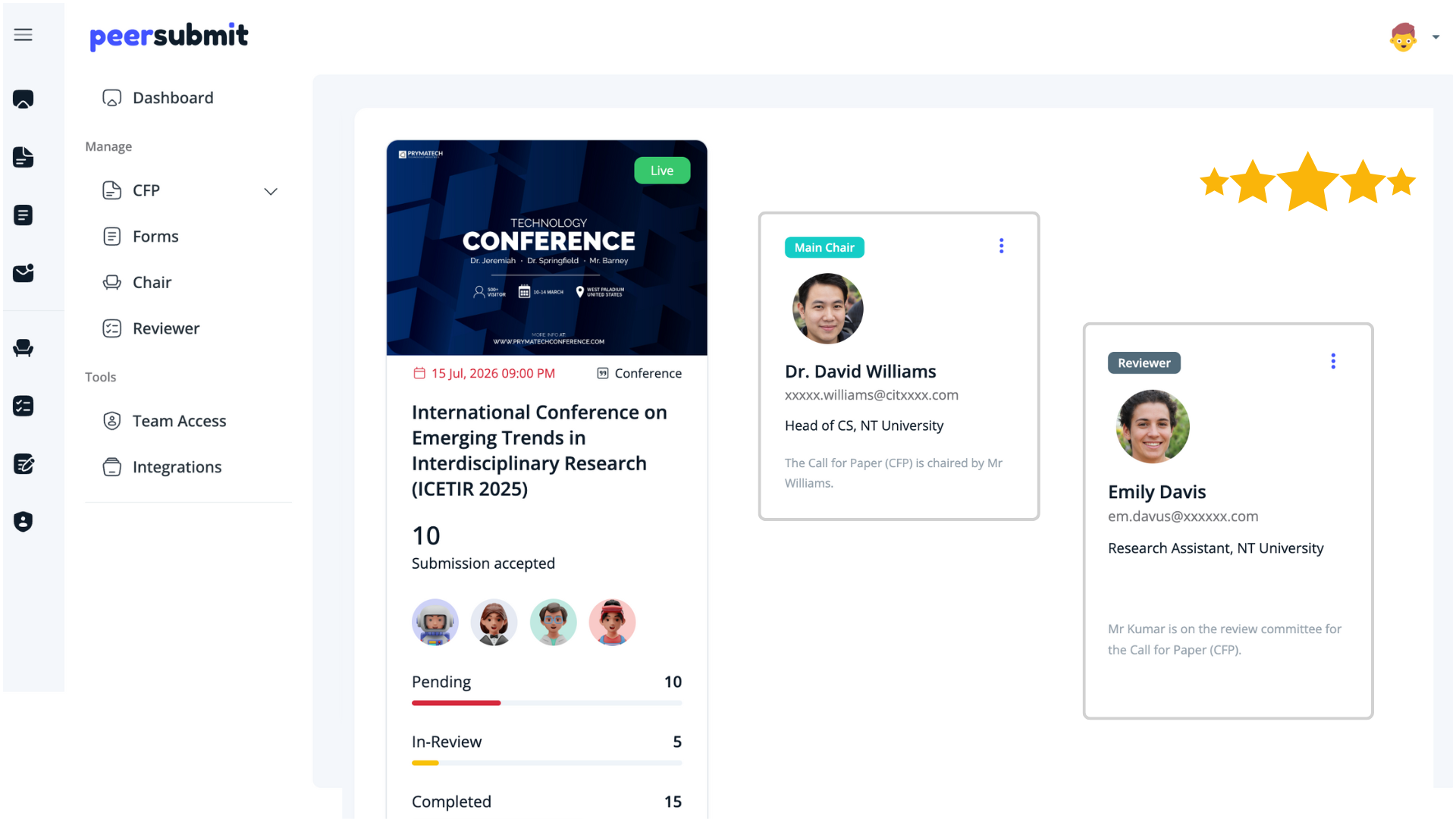
Integrated dashboards within conference management software give committees instant visibility into review progress without manual reporting.
Why Universities Are Adopting AI Gradually
Academic institutions value trust, transparency, and control.
- AI augments—not replaces—human roles
- Decisions remain explainable
- Data security and privacy are preserved
This careful, quiet adoption ensures AI improves efficiency while respecting academic integrity.
Final Thoughts: Quiet Innovation, Real Impact
AI isn’t changing academic peer review overnight—and that’s a good thing. Its real power lies in removing friction, supporting reviewers, and giving organizers the tools they need to manage growing complexity.
As submission volumes continue to rise, AI-powered platforms like PeerSubmit help universities and conferences scale responsibly—without sacrificing fairness, rigor, or trust.
Start Running Your Conference—From Submission to Decision
Join hundreds of organizers who trust PeerSubmit to manage their academic events with AI-powered efficiency and seamless workflows.
No credit card required • Setup in minutes
AI Automation FAQs
Run Your Conference Without the Chaos
Manage submissions, peer review, registrations, and event workflows—all in one platform built for academic conferences.
Join hundreds of academic conferences already using PeerSubmitNo credit card required • Setup in minutes